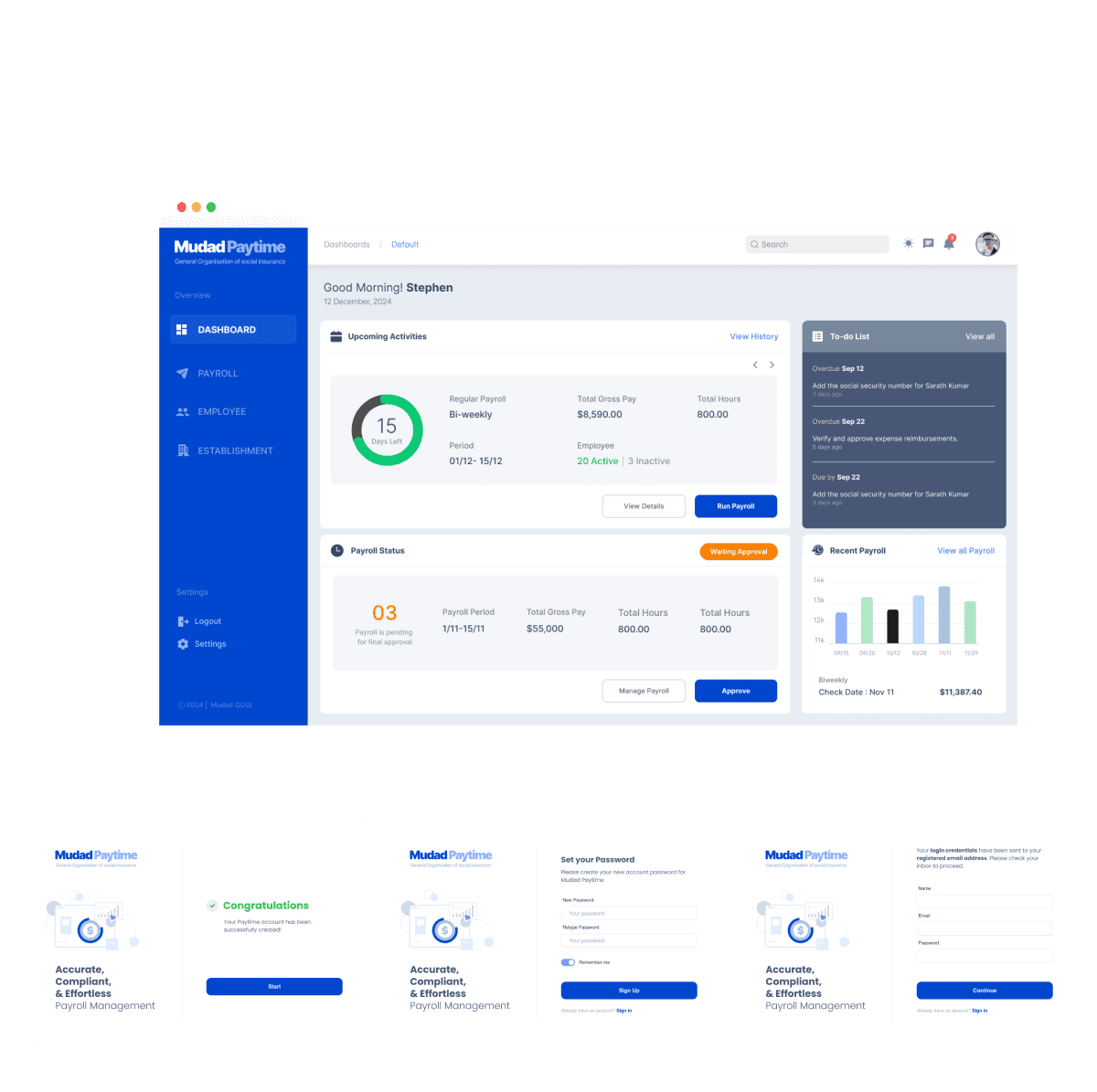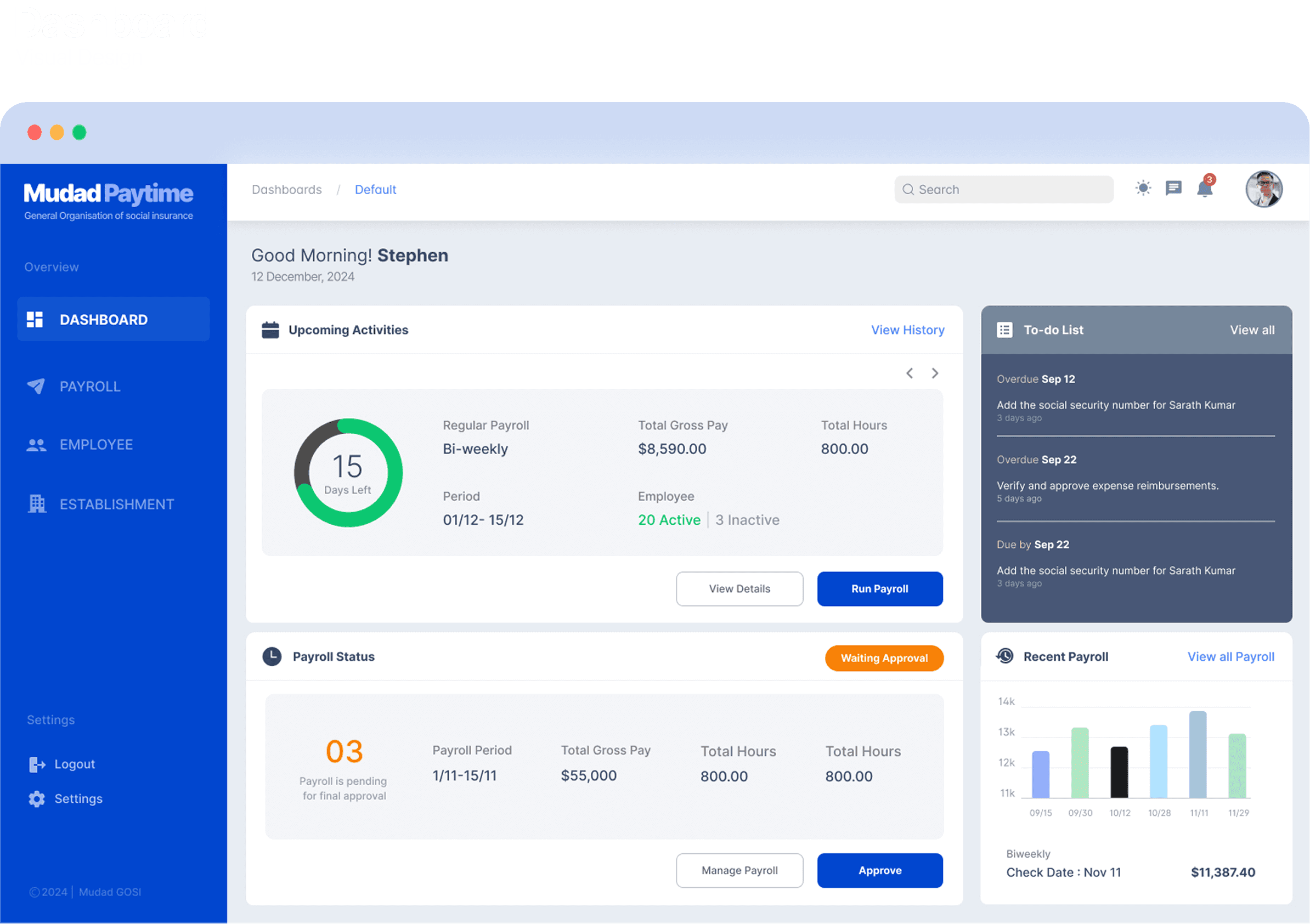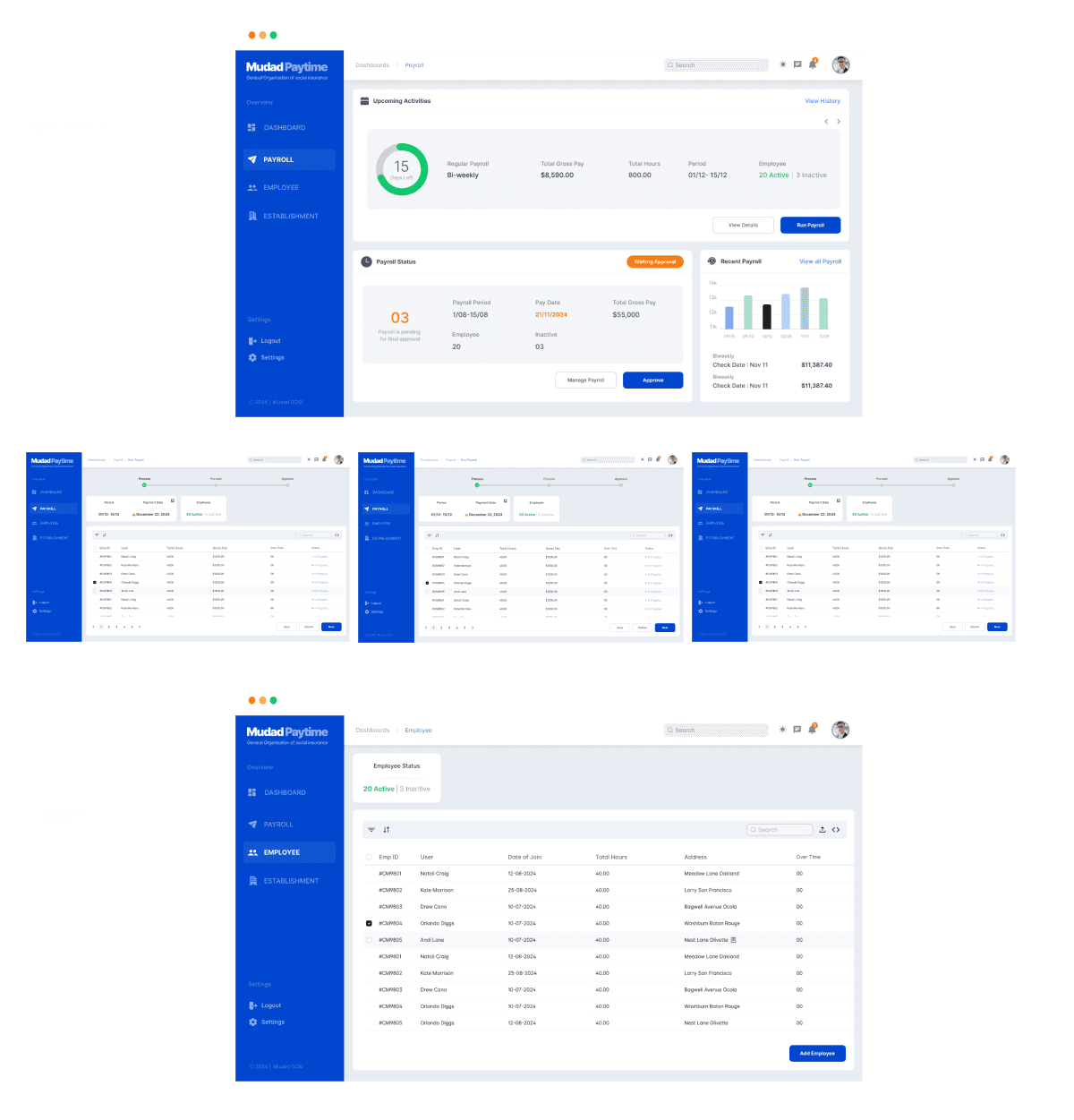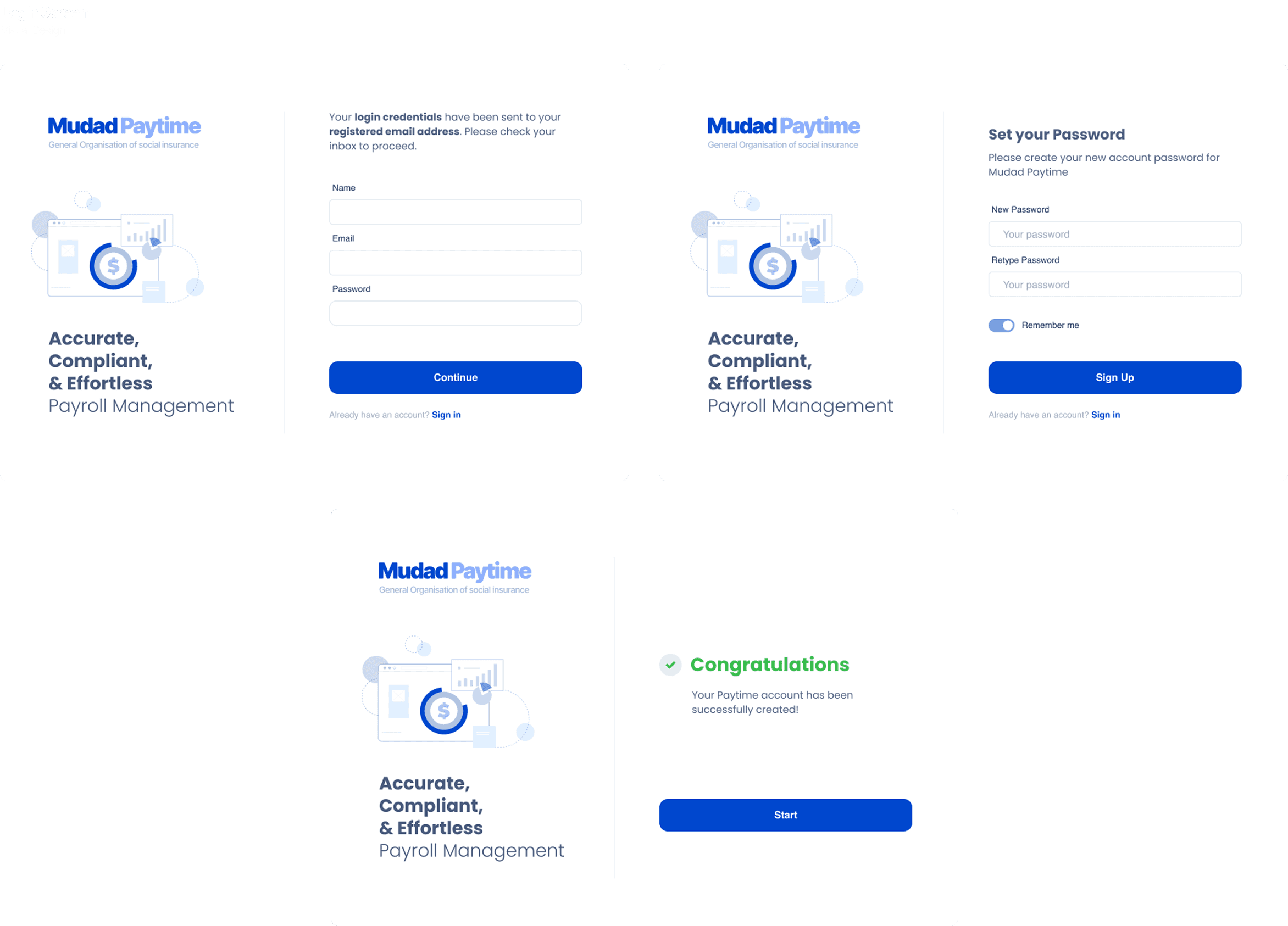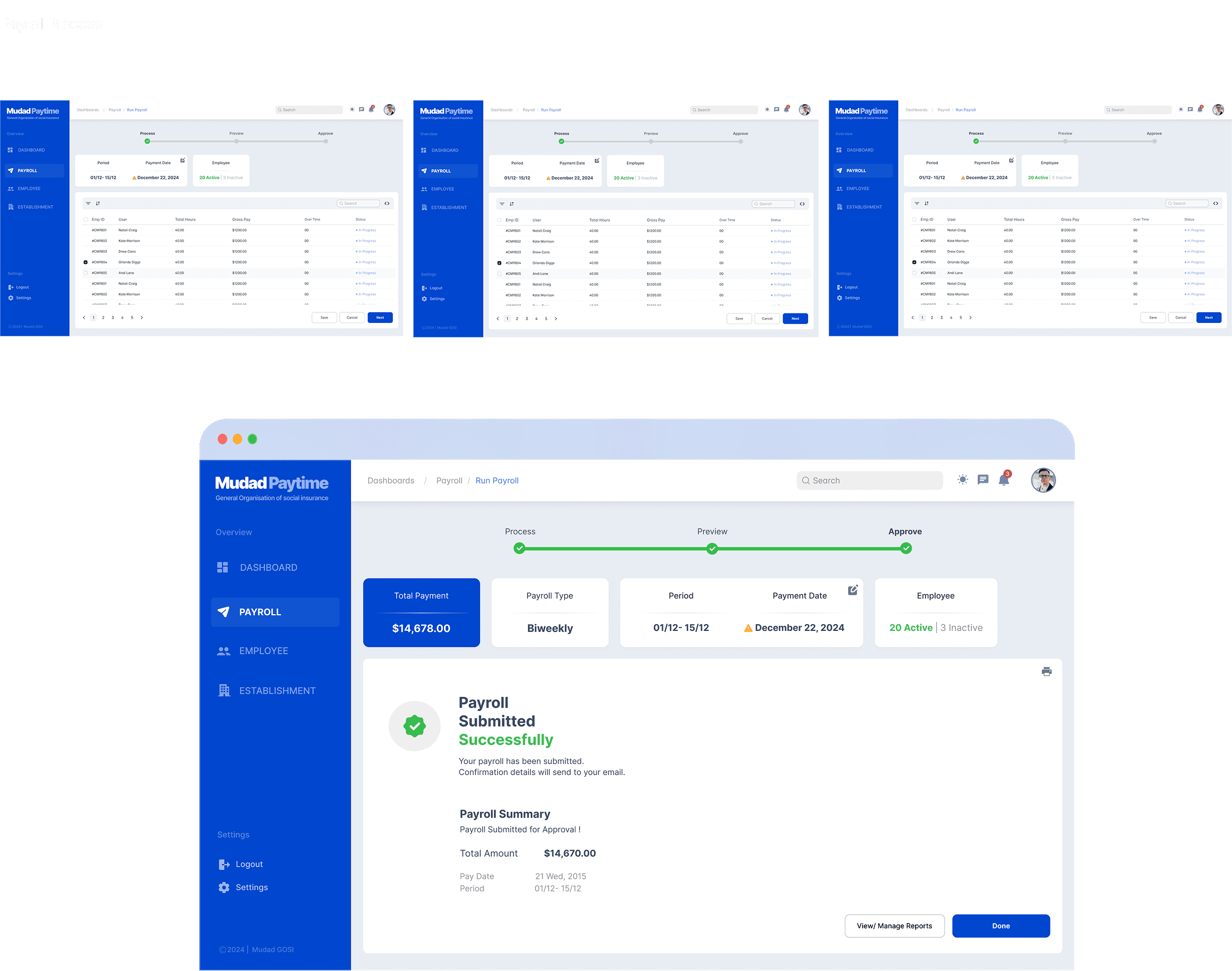
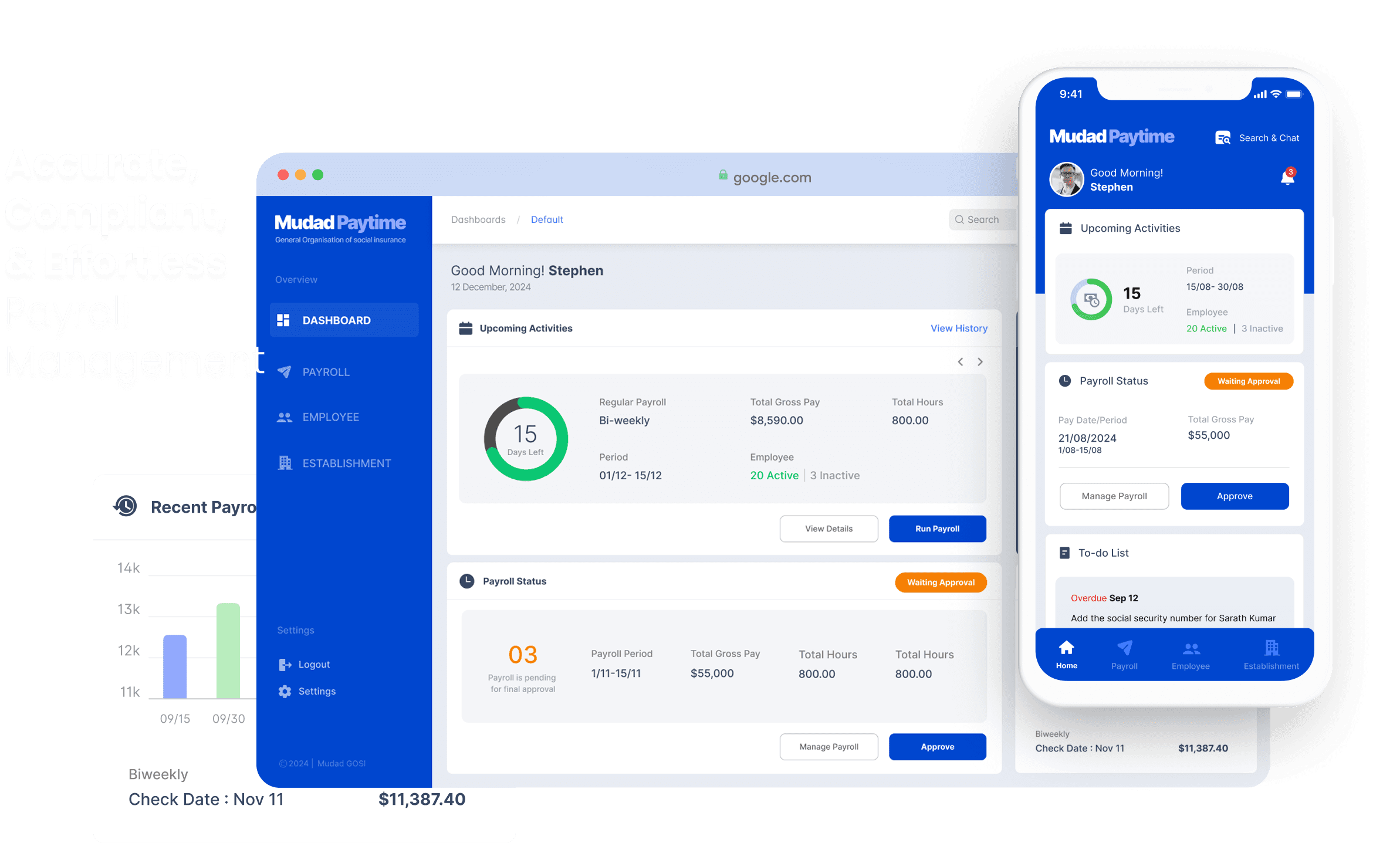
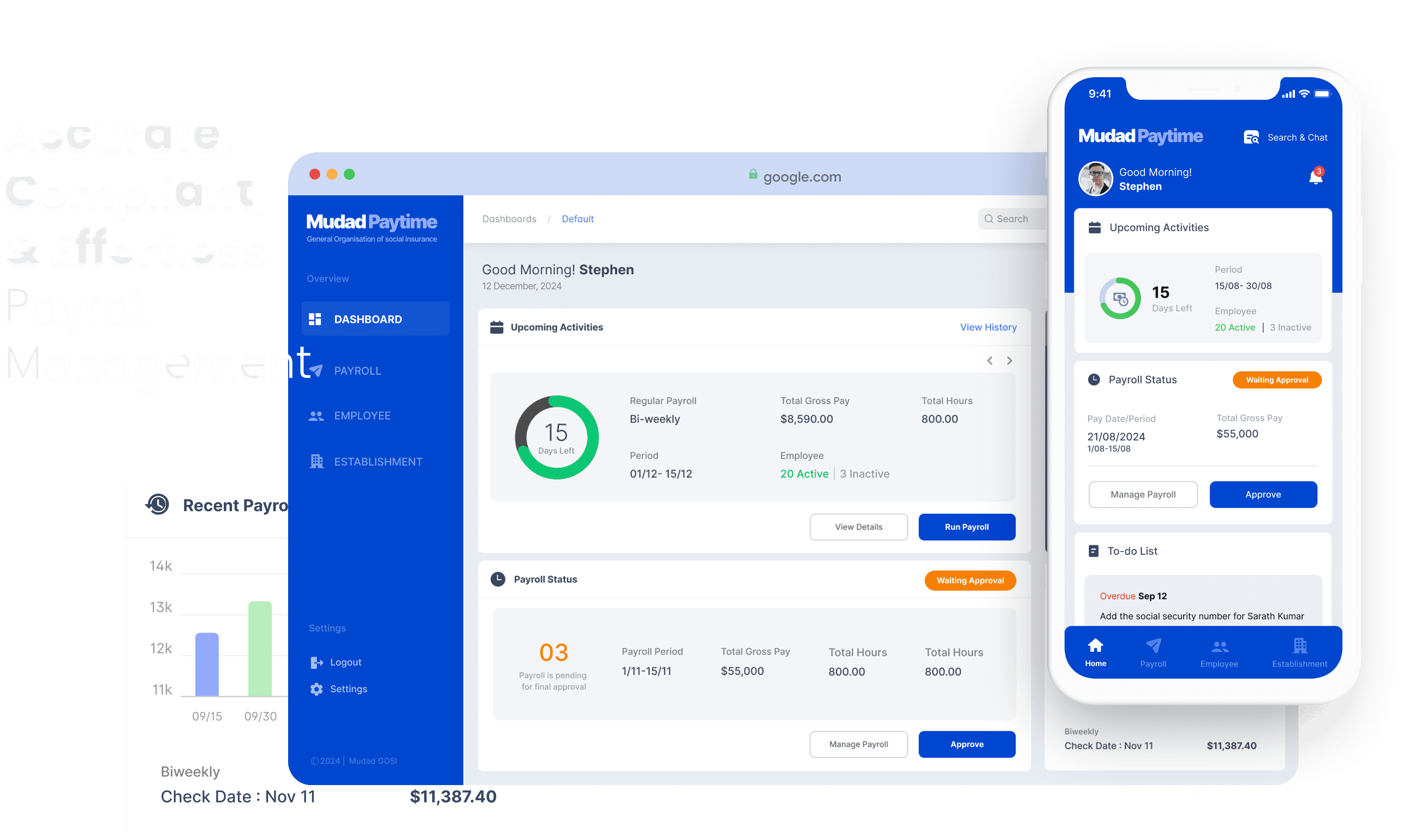
This project is protected under a Non-Disclosure Agreement (NDA), so specific details and assets have been omitted. What follows is a high-level look at my approach, outlining the research, design thinking, and problem-solving methods that drove the project’s outcomes.
SaaS
B2B
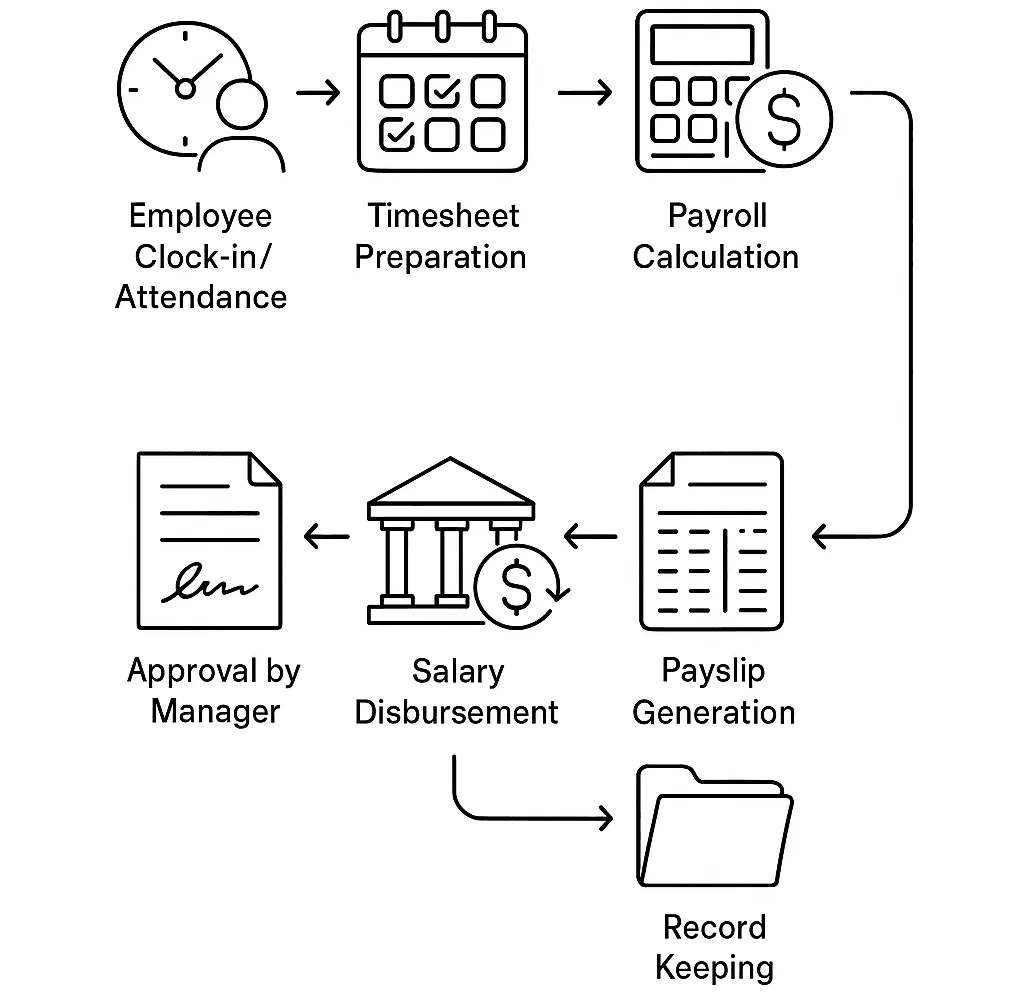
Payroll app is developed to improve the quality of payroll systems by offering innovative digital solutions to small and medium establishments. This will support the WPS initiative and assist MOL in wage protection policies.The scope of this project is to bundle a set of services that would assist establishments to manage and process their employees data and payroll
KPIs
Reduction in Payroll Processing Time :
80% decrease in time taken to process payroll compared to the manual system.
Error Rate in Payroll Calculations:
95% reduction in errors from manual entry and calculations.
User Satisfaction Score (Post-Launch Survey):
90% satisfaction rate among SME owners and payroll administrators.
Reduction in Bank Report Processing Delays:
75% faster turnaround from payroll submission to bank confirmation.
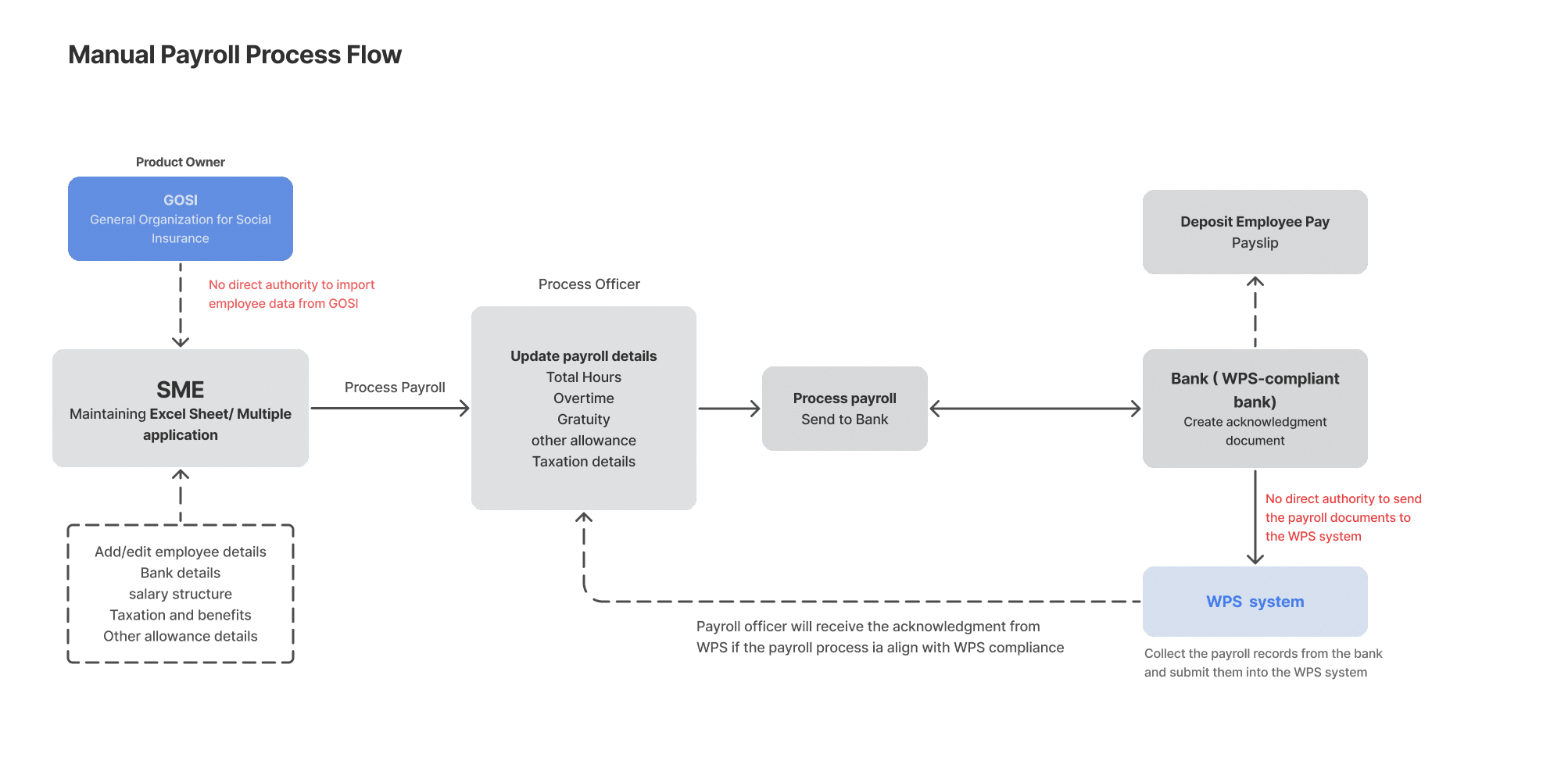
Problem Statement
STEP 1 - OBSERVE
Getting to know the users
& understanding the context
In order to ensure that our solution directly solves the problem and benefits the users, we started with user interviews as part of the discovery process. The objective was to get a good understanding of the processes that are in place and evaluate areas where users go through challenges that they have to work around.
Approach
Carefully selected a diverse group of users who interact with the system daily, including both primary users and stakeholders.
The interviews focused on understanding the current workflow, challenges faced during task completion, user satisfaction levels, and any gaps in the existing system.
I interviewed 8 users, representative of our 3 key user groups (Establishment Owner, Payroll officers, and GOSI employee), in order to understand the hopes, fears, and goals that motivate them.
View Script
Outcome
The interviews revealed critical pain points, such as cumbersome navigation, lack of real-time updates, and the need for better integration with other tools.
The insights gained from these interviews became the foundation for our design process, ensuring that the solution we developed was user-centered and effectively addressed the identified challenges.
Understanding competitors
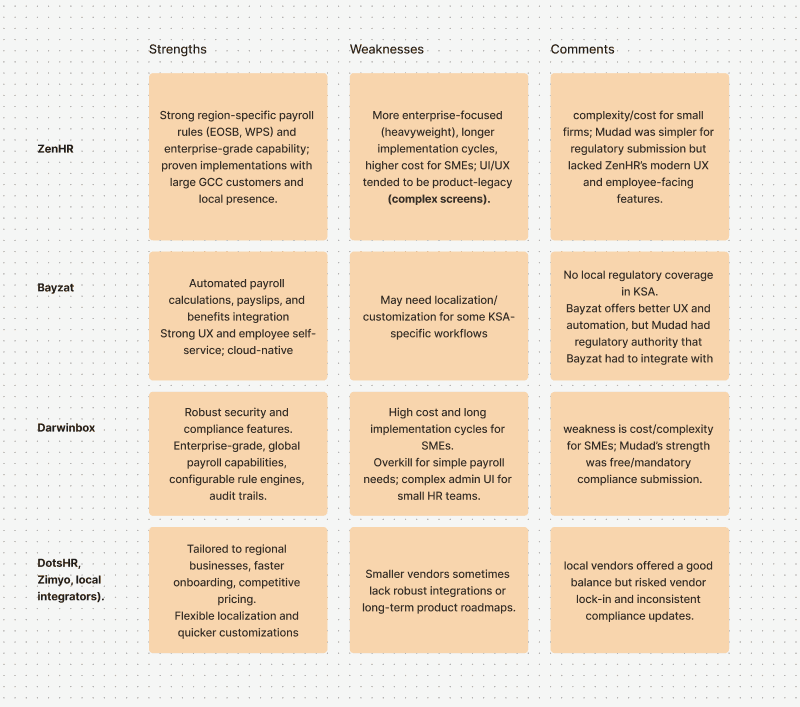
Commercial competitors such as ZenHR and Bayzat offered superior user experience, payroll automation, and integrated HR features, but their weaknesses lay in higher complexity, cost for SMEs, and less direct compliance authority.
SMEs faced several pain points, mainly around compliance with Saudi labor and wage protection laws.
Here’s a structured list of the major issues:
User Journey
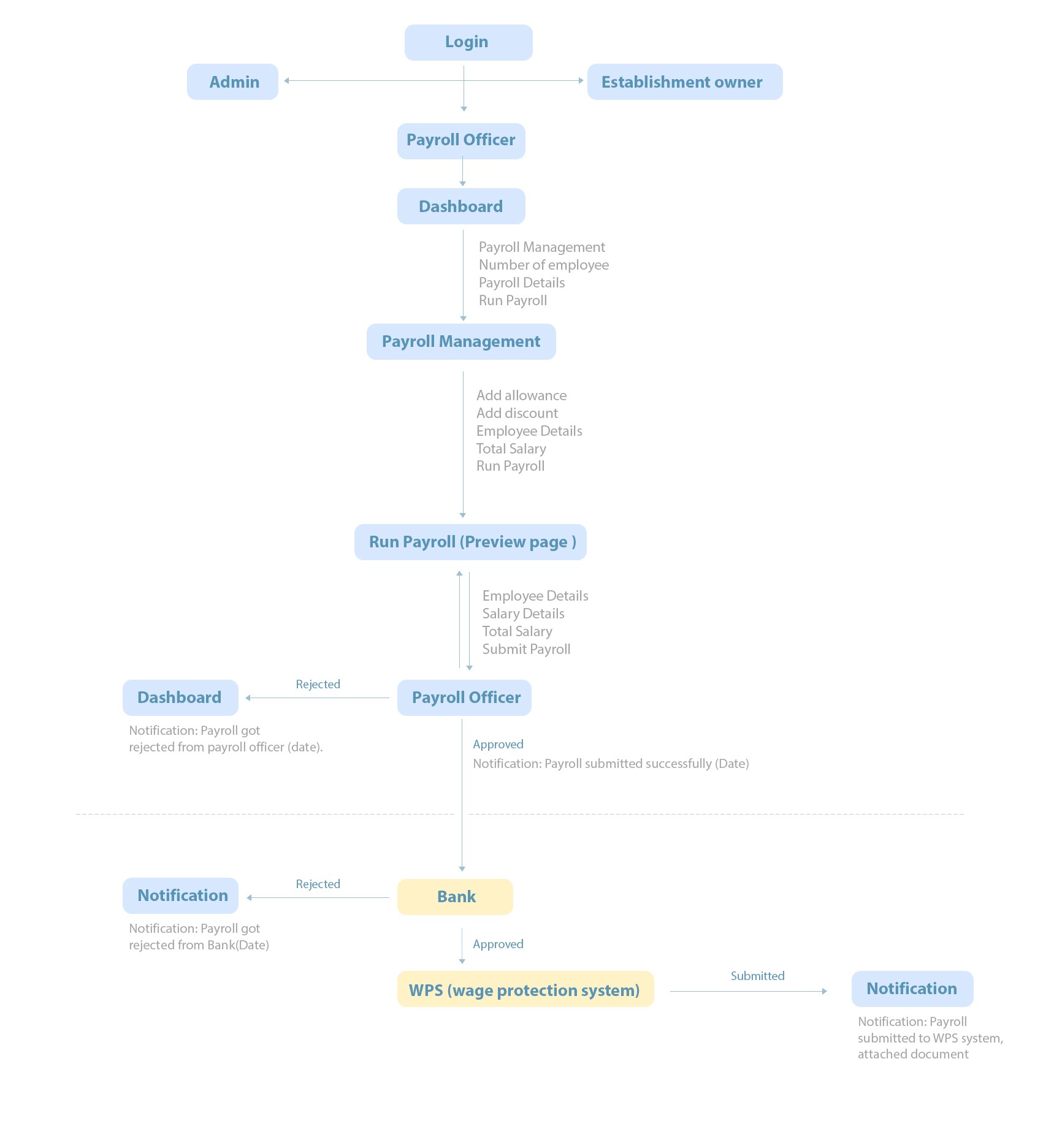
User flow is the path taken by a prototypical user on a website or app to complete a task. The user flow takes them from their entry point through a set of steps towards a successful outcome and final action, such as processing a payroll.
Closed Card Sorting
Asked the participants to organize topics into categories based on what made sense to them. Used actual cards/pieces of paper and grouped them accordingly
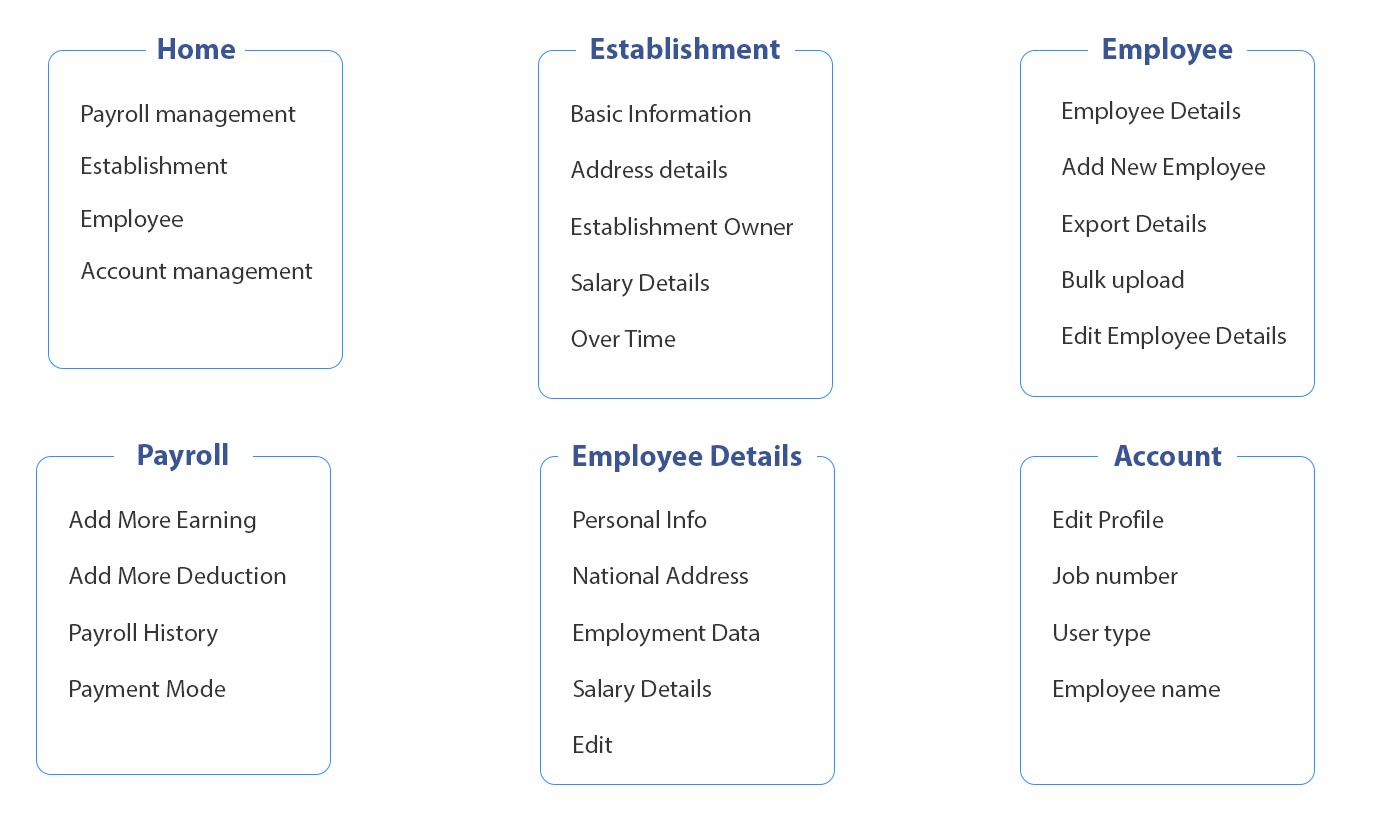
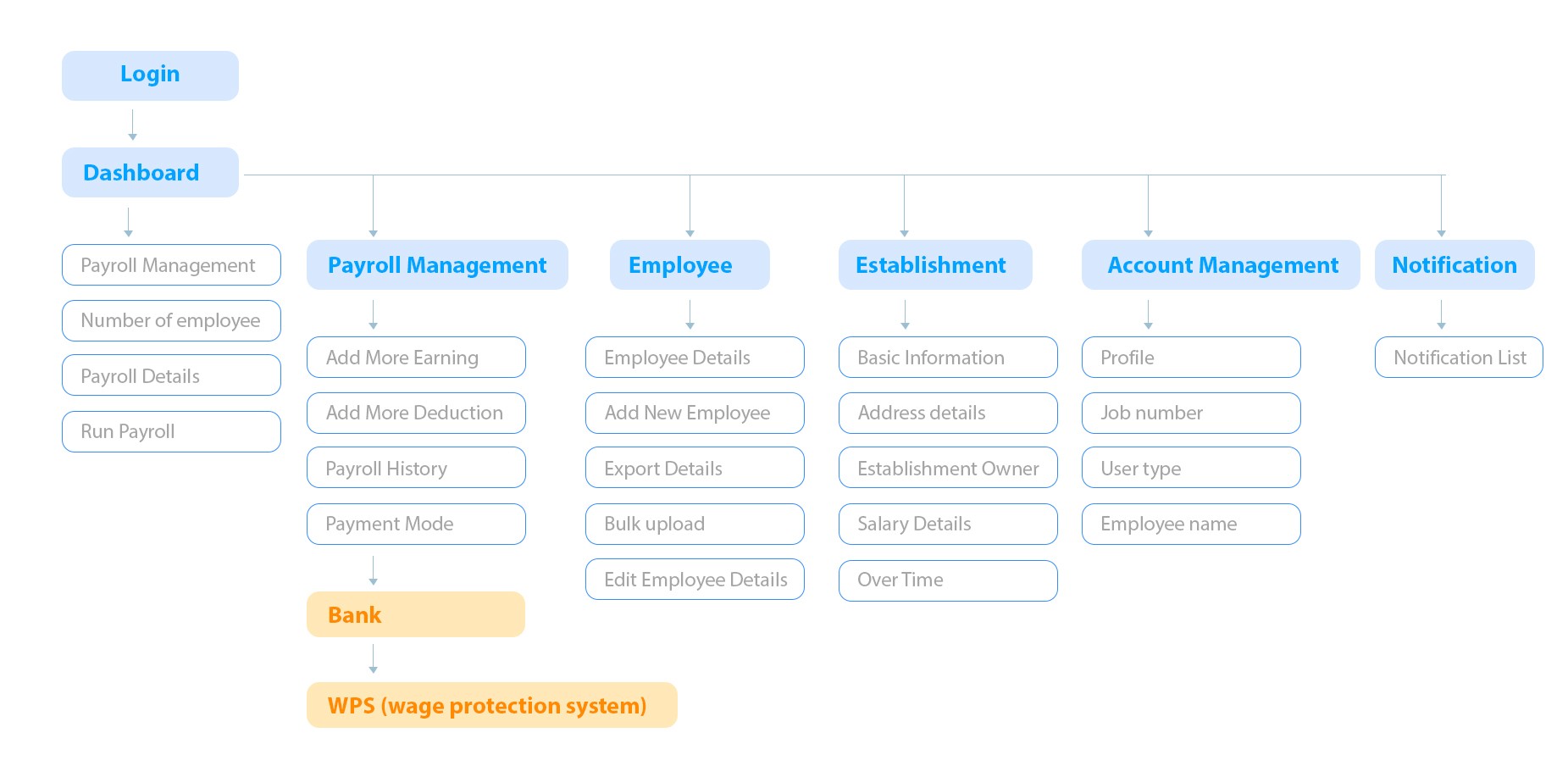
Information Architecture
STEP 3 - MAKE
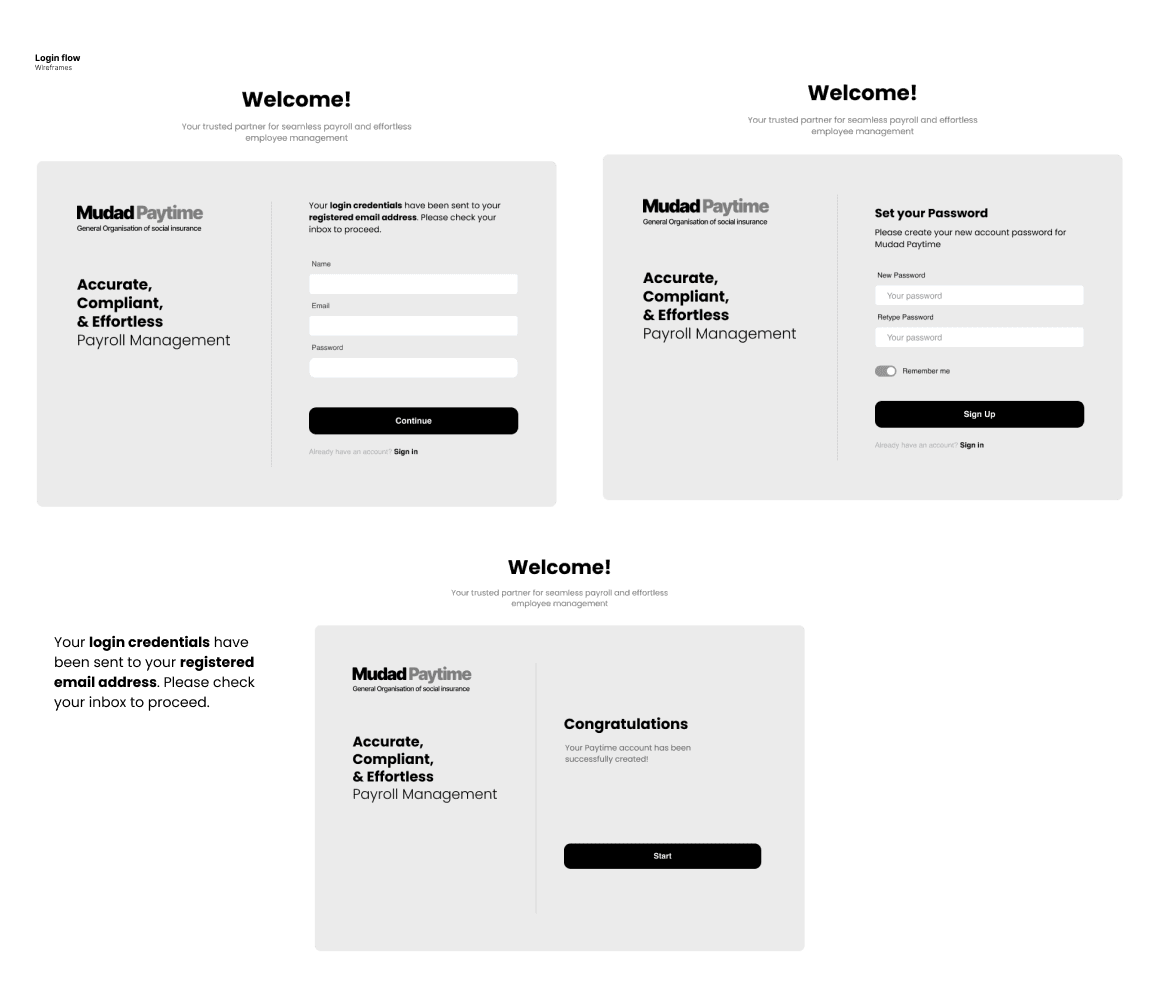
Initial wireframes &
prototyping
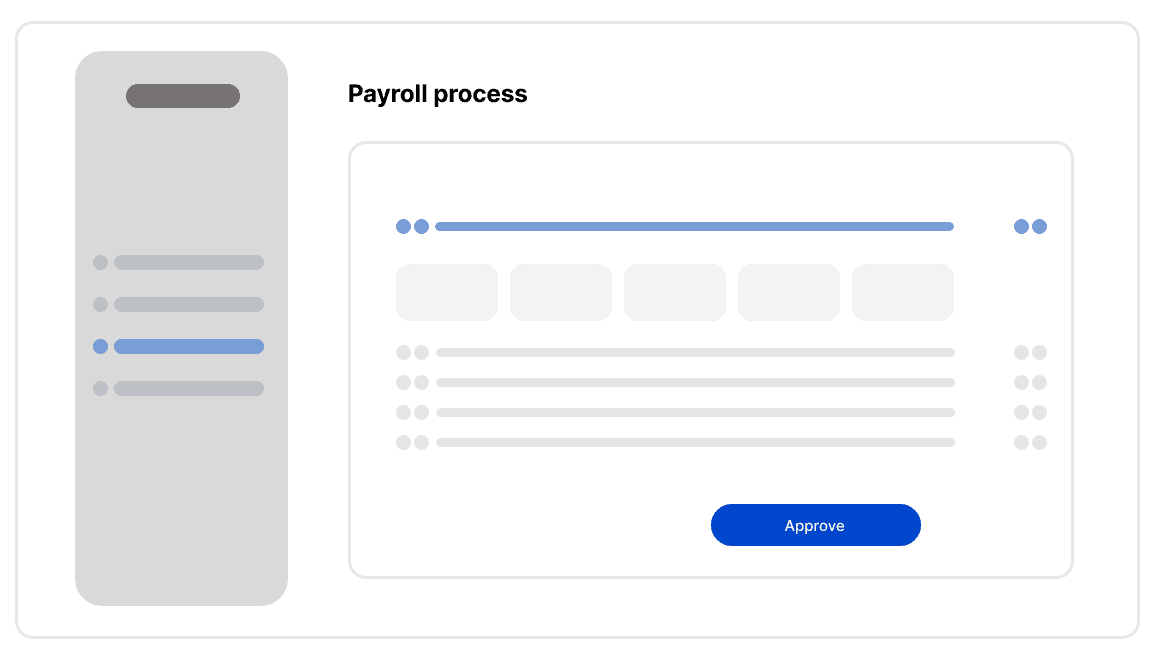
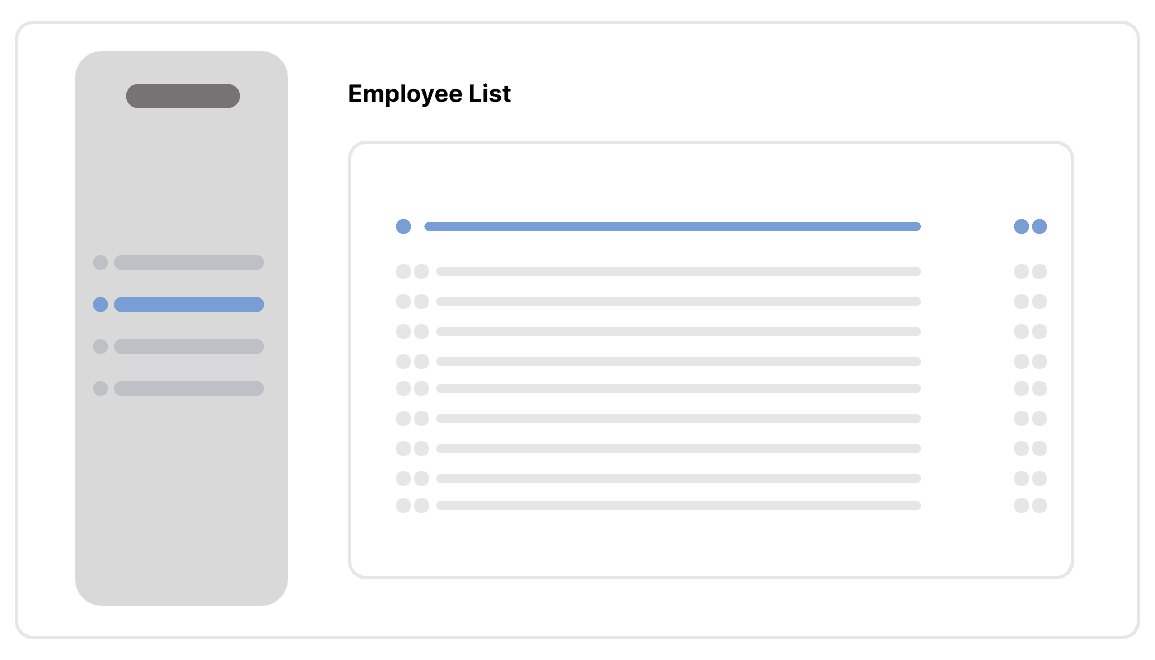
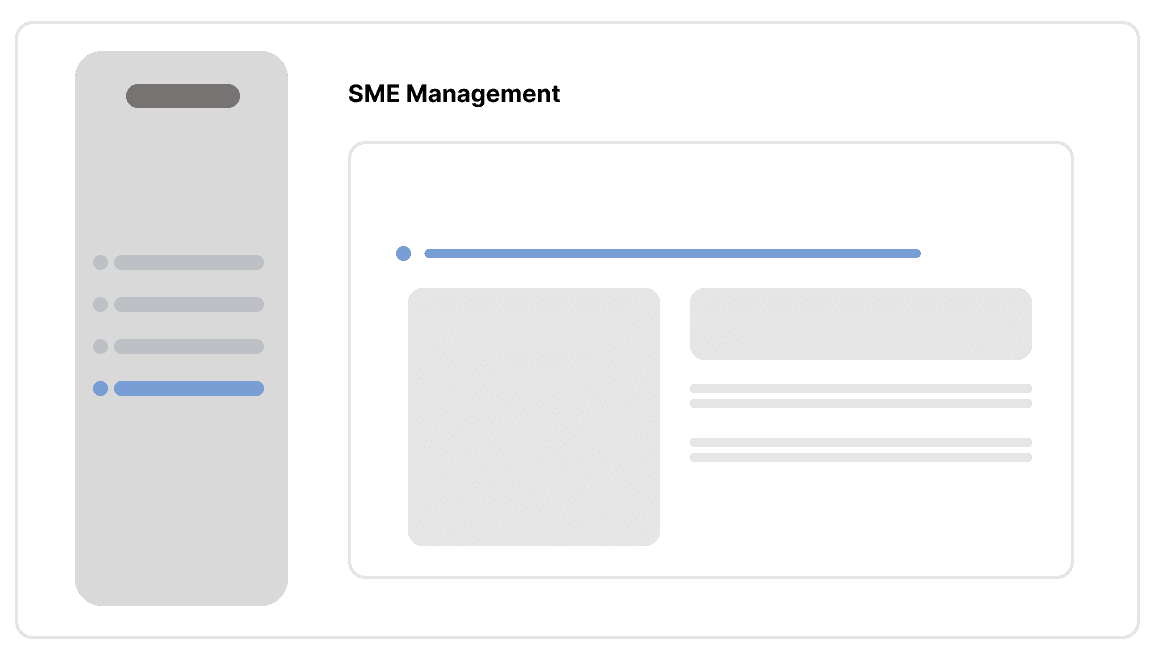
Low fidelity designs allowed us to test and iterate on our initial designs without having to spend too much time or resources on ironing out the details.

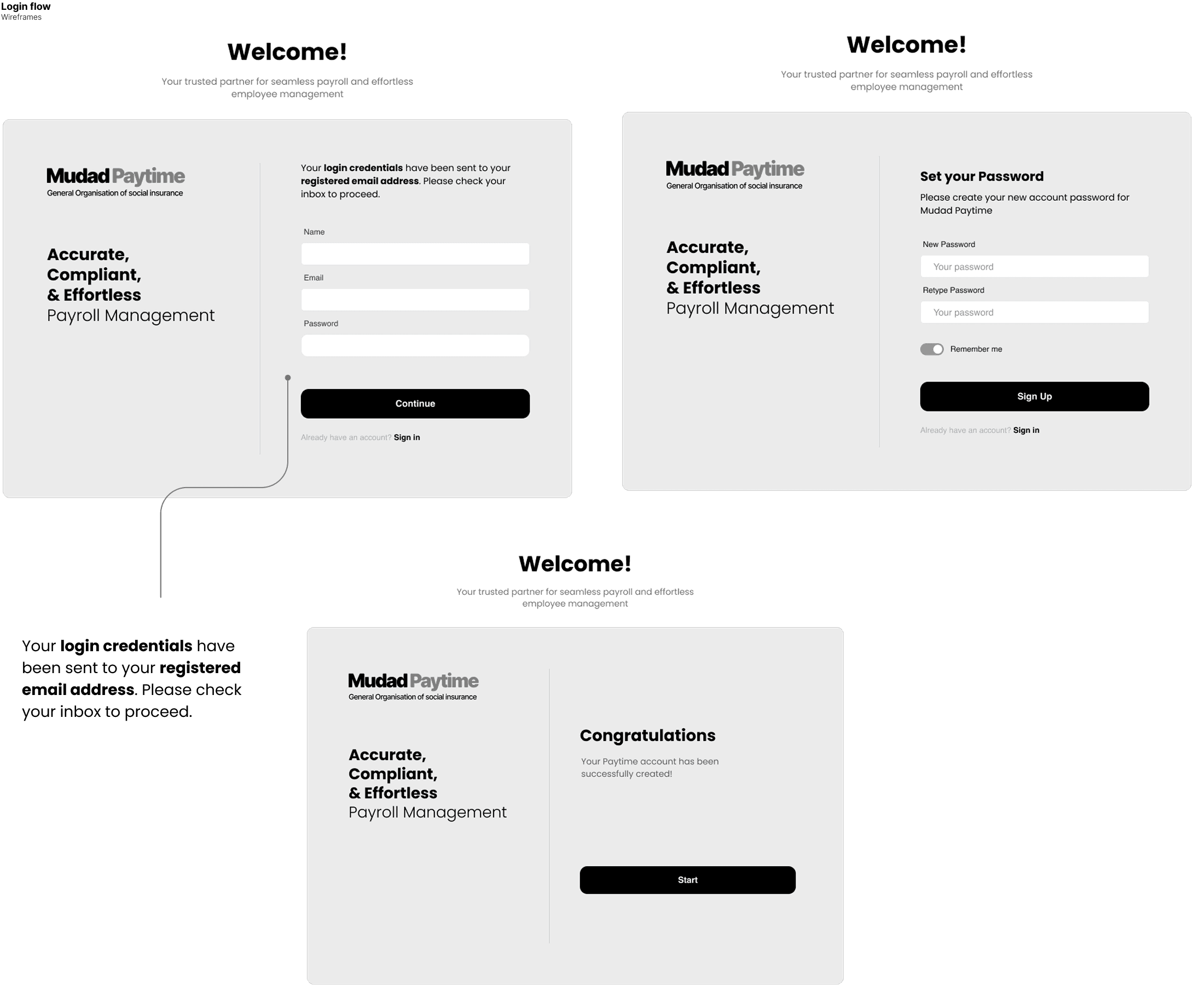

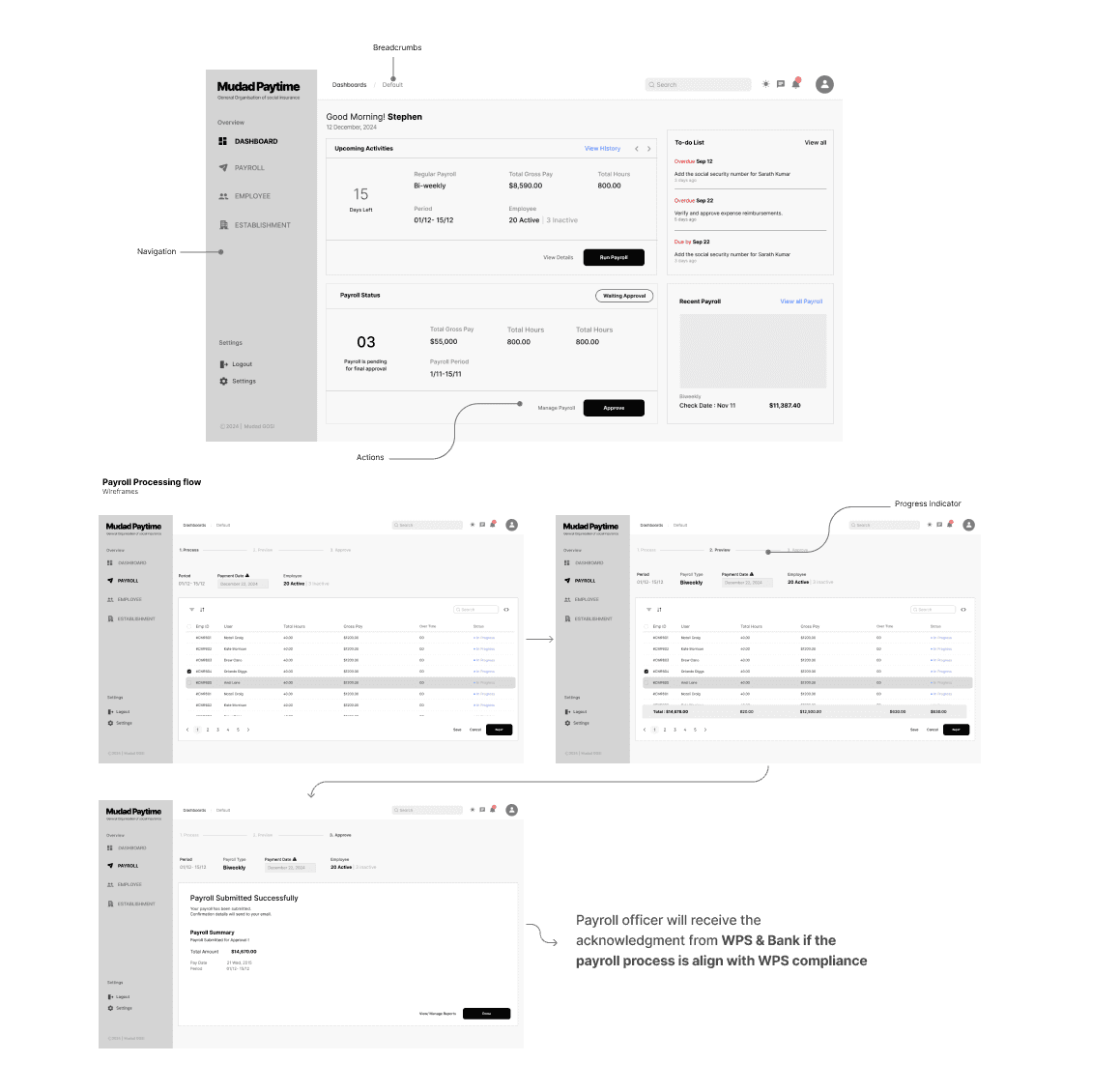
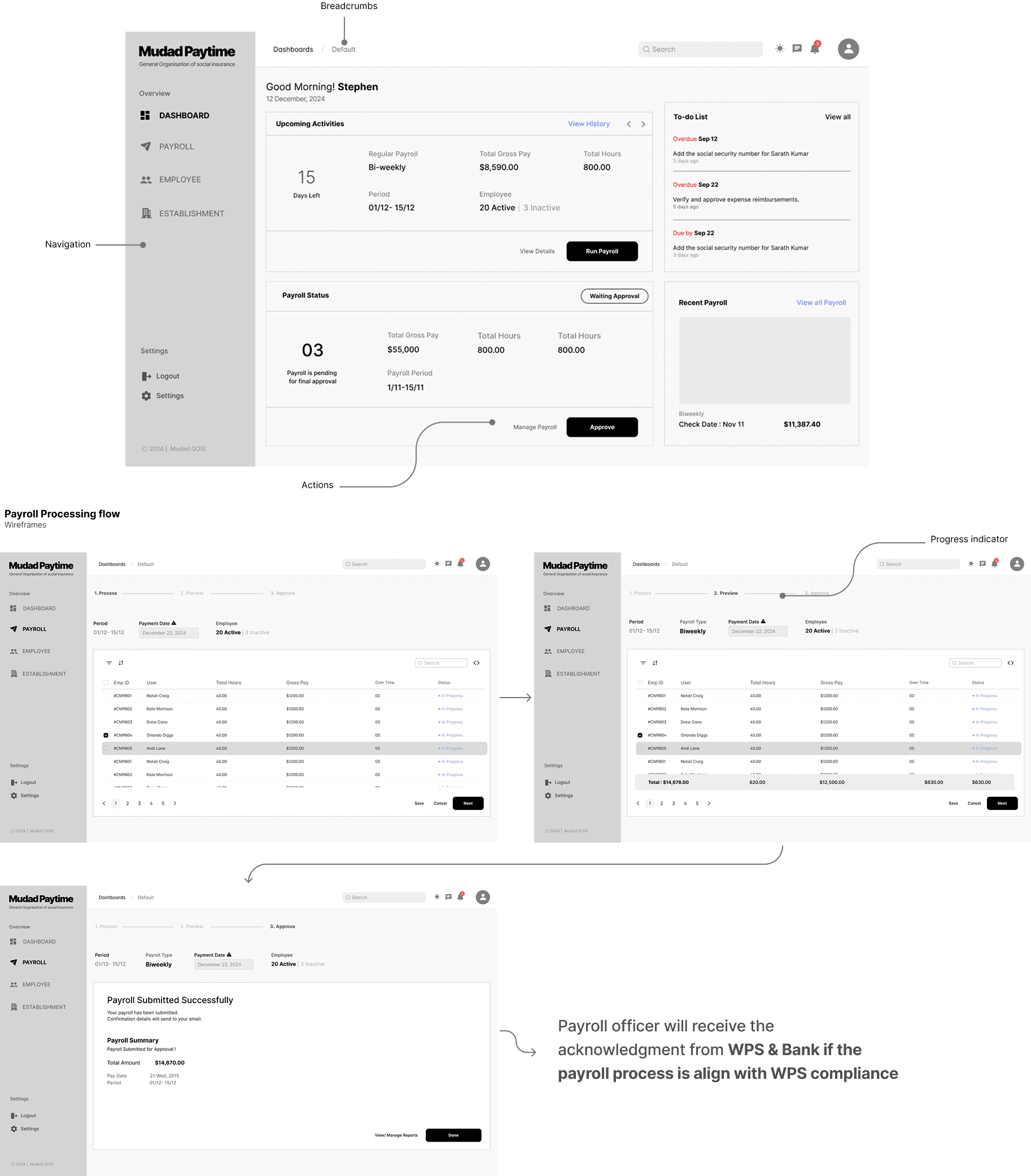
Visual Design
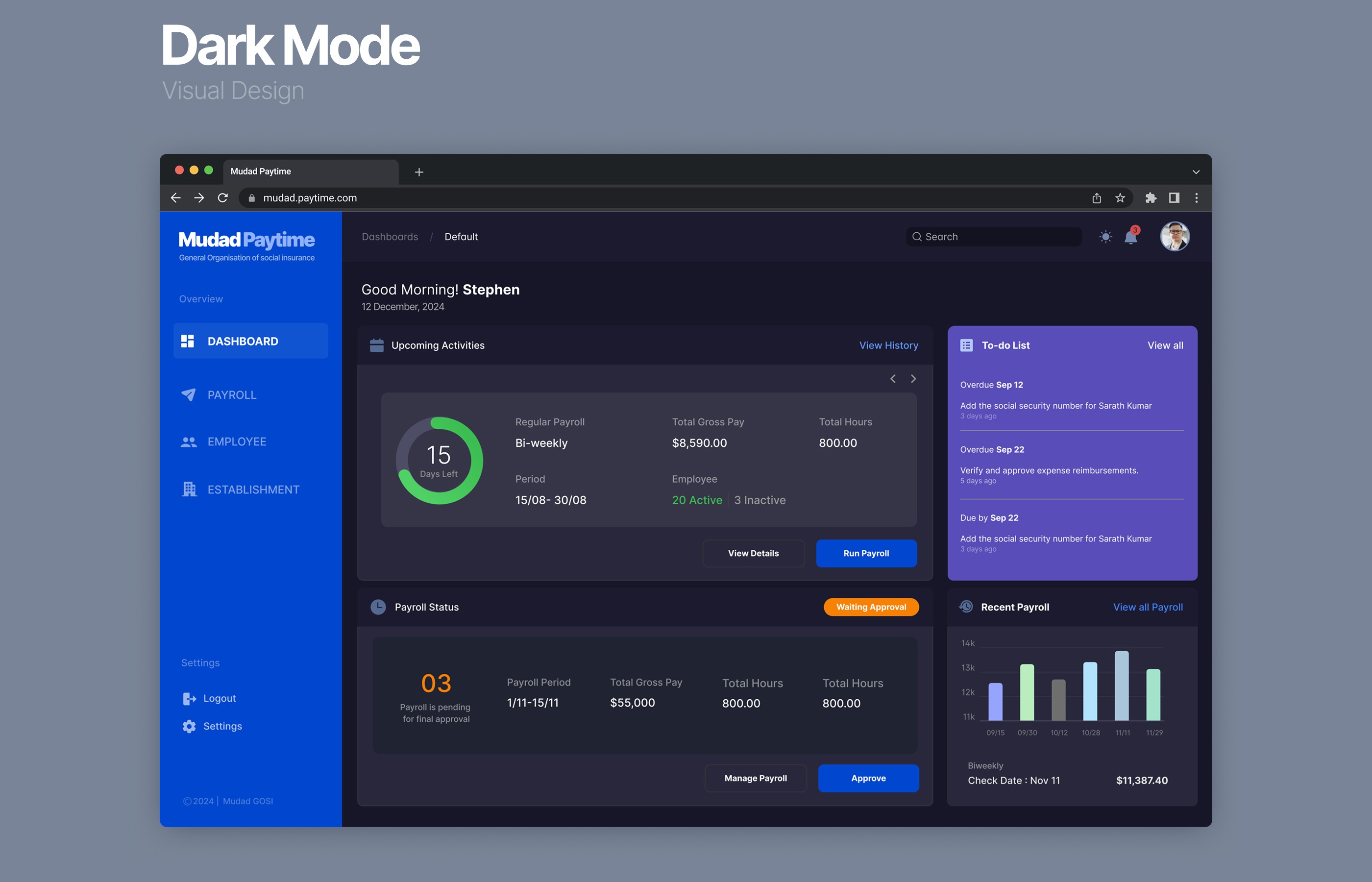
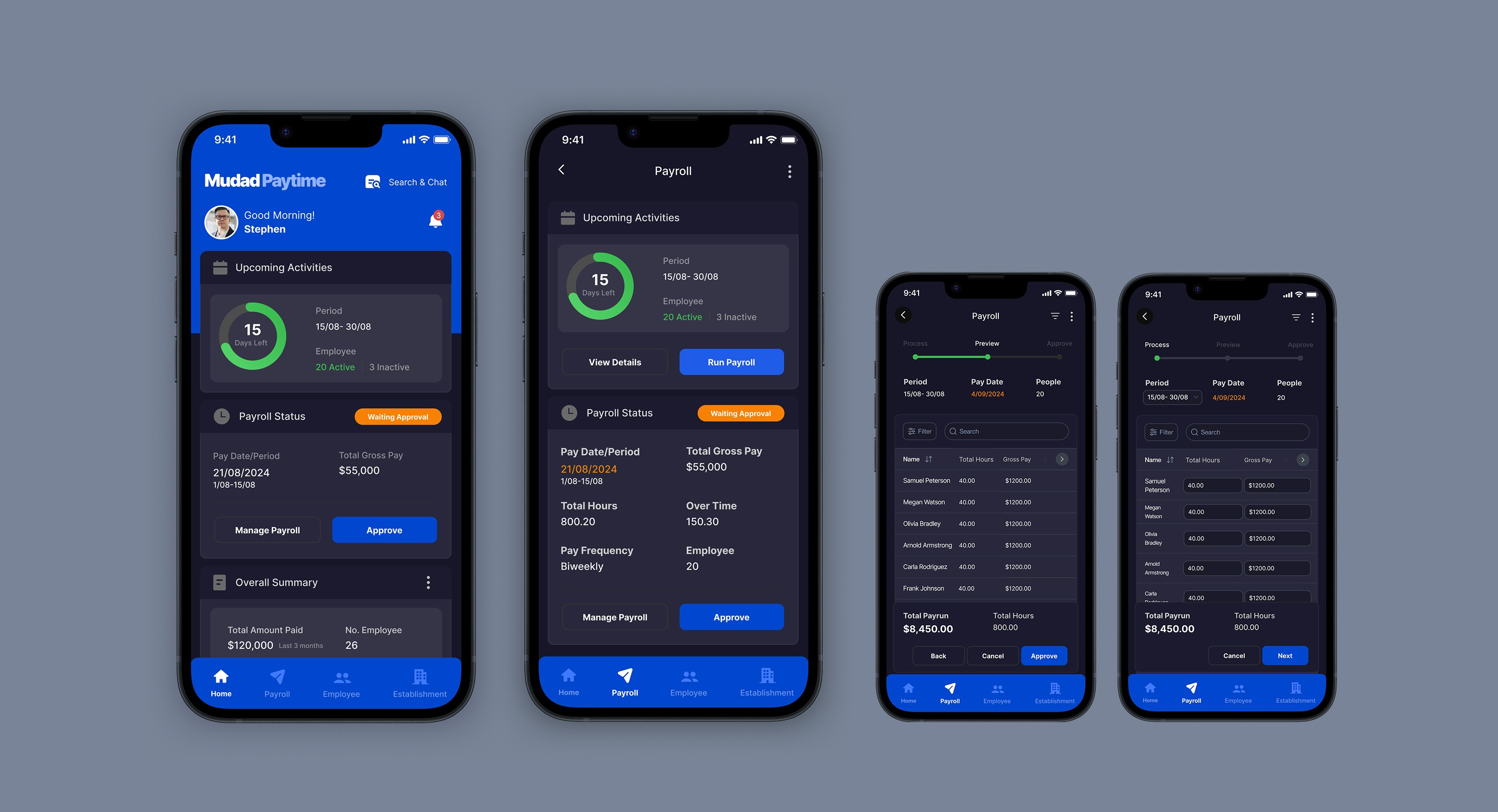
visually consistent interface that aligns with the brand’s identity and enhances usability. Before finalizing the visual design, I conducted multiple iterations of wireframes to explore different layouts, information hierarchies, and interaction patterns. This iterative process allowed me to validate design decisions early, address usability concerns, and ensure that the final visual design not only looks aesthetically pleasing but also supports a seamless user experience